

Choosing the right studio monitors can feel like finding a needle in a haystack—if that needle was also a sound engineer with a knack for bass drops. With so many options out there, it’s easy to get lost in the specs and forget what really matters: clarity, accuracy, and a little bit of fun. After all, who wants to mix a track that sounds great in the studio but like a bag of cats on a road trip when played elsewhere?
Importance of Studio Monitor Selection
Selecting the right studio monitors significantly impacts audio production quality. Clear and accurate sound representation allows for precise mixing and mastering. The choice of monitors influences how tracks translate across different listening environments. Understanding the nuances of sound reproduction helps in making informed decisions.
Many factors contribute to the selection process. Room acoustics, for example, play a crucial role in perceived sound quality. A monitor that excels in one space may underperform in another. Each individual’s listening preferences also affect monitor choice. Some may prioritize bass response while others value high-frequency clarity.
Technical specifications provide a baseline for evaluation. However, overemphasizing numbers can lead to confusion. A balanced approach combines specs with subjective listening tests. Engaging with monitors in various settings enhances overall comfort and enjoyment.
Consideration of the budget is vital. While high-end monitors offer exceptional performance, quality options exist within lower price ranges. Investing wisely ensures a foundation for effective audio production. Many reputable brands cater to diverse financial needs without compromising sound fidelity.
Ultimately, the goal centers on creating music that resonates emotionally. Choosing monitors that reflect personal taste creates a rewarding production experience. Gaining familiarity with selected monitors builds confidence over time. Monitoring decisions shape not only the current project but also future works and creativity.
Factors to Consider in Studio Monitor Selection
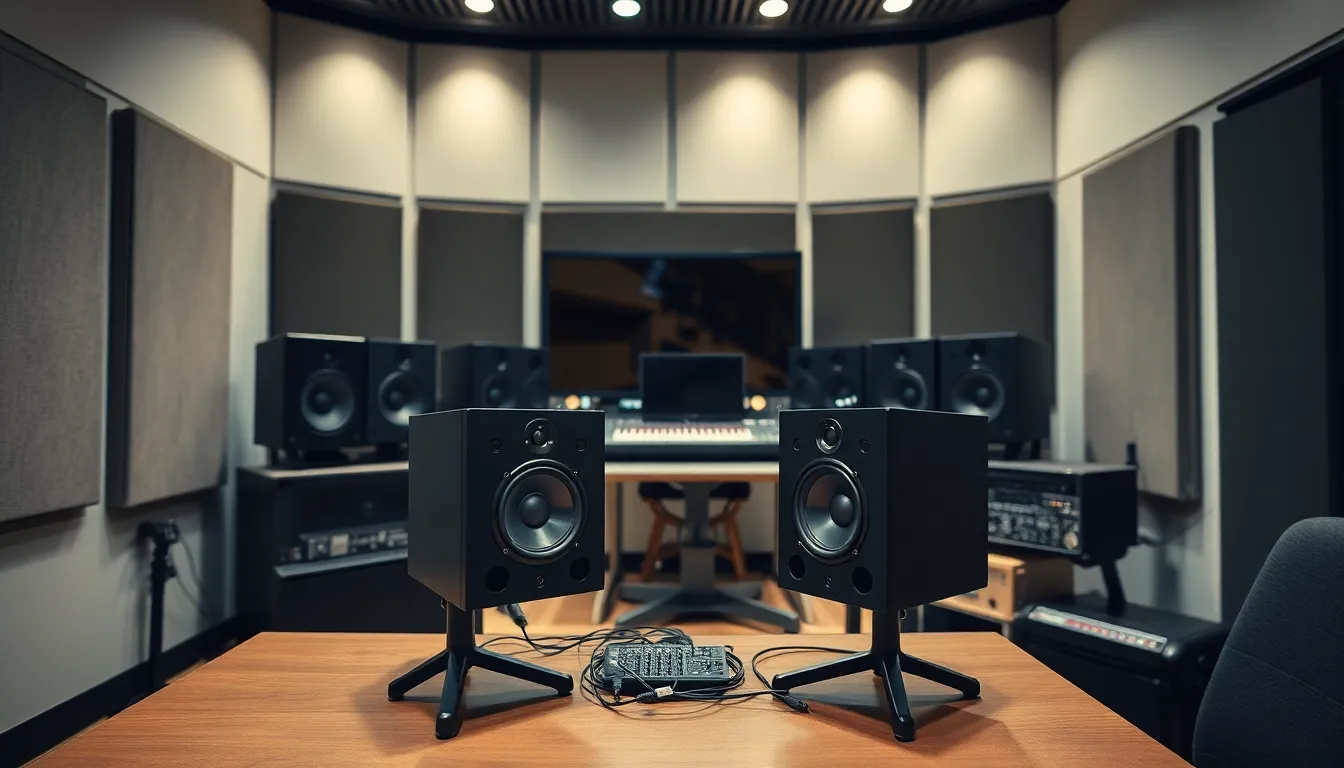
Selecting the right studio monitors involves several key factors that can significantly influence audio production quality.
Room Size and Acoustics
Room size impacts sound behavior significantly. Smaller rooms may require near-field monitors to ensure clarity and minimize reflections. Larger spaces can accommodate full-range monitors, providing a more immersive listening experience. Acoustics affect how sound waves interact with the room. Proper treatment can enhance sound quality, reducing issues like bass buildup or excessive high frequencies. Evaluating room dimensions alongside existing furnishings helps determine the best monitor placement for accurate monitoring.
Speaker Size and Type
Speaker size affects bass response and overall sound output. Larger woofers deliver deeper bass, while smaller models produce tighter, more accurate highs. Active monitors contain built-in amplification, simplifying setup and optimizing sound. Passive monitors require external amplifiers, offering flexibility in selecting amplification. Choosing the speaker type largely depends on production needs and listening preferences. Acoustic characteristics and intended use dictate whether to opt for neutral or colored sound profiles.
Budget and Brand Preferences
Budget plays a crucial role in monitor selection. Quality monitors exist across various price ranges, ensuring options for different financial constraints. Prioritizing features like frequency response and power handling aids in making informed decisions. Brand preferences often stem from reputation and user feedback. Popular brands provide trustworthy stakeholders in audio technology, ensuring reliability and support. Exploring product reviews can help identify standout models that align with both budget and personal taste.
Types of Studio Monitors
Studio monitors come in various types, each designed to serve specific audio production needs. Understanding the differences aids in selecting the best option for unique listening environments.
Active vs. Passive Monitors
Active monitors feature built-in amplifiers, allowing for easier integration with audio interfaces. They’re popular among those who seek simplicity and reduced setup time. Controls for sound customization often come with active monitors as well. Passive monitors require external amplifiers, which can provide more flexibility in sound calibration. Users appreciate the potential for tailored sound when using passive options. Budget allocations typically differ, as active models might cost more upfront, but passive setups can add to overall expenses.
Nearfield vs. Farfield Monitors
Nearfield monitors function best in smaller spaces, offering precise sound reproduction without overwhelming bass. Listeners benefit from close placement, reducing room acoustics’ impact. This type of monitor is ideal for home studios or tight environments. Farfield monitors, on the other hand, excel in larger studios where sound needs to cover vast areas. They provide a more immersive listening experience. The choice between nearfield and farfield often depends on the studio size and the desired listening environment, ensuring clarity and detail remain a priority in the production process.
Top Studio Monitor Options in 2023
Multiple studio monitor options exist in 2023 across various price points, including budget-friendly choices and high-end picks tailored for discerning audio professionals.
Budget-Friendly Choices
Affordable monitors provide excellent sound quality without breaking the bank. Popular options like the Yamaha HS5 and KRK Rokit 5 offer impressive clarity and have gained widespread acclaim. Both models boast a user-friendly design and strong performance, making them suitable for beginners and hobbyists. The PreSonus Eris E5 also stands out, featuring adjustable acoustic tuning for enhanced adaptability in various environments. These monitors allow producers to achieve balanced mixes, ensuring that quality sound isn’t exclusive to expensive gear.
High-End Picks
High-end studio monitors deliver exceptional audio fidelity and precision, catering to professionals in music production. The Adam A7X offers detailed sound reproduction and an expansive sweet spot, making it a favorite among seasoned engineers. Focal Solo6 Be stands out with its remarkable low-end response and even frequency distribution, ensuring accurate mixes across genres. The Neumann KH 120 A brings a revered reputation, combining pristine audio quality with robust build integrity. These monitors optimize the mixing and mastering process, allowing artists to create polished tracks that resonate in any listening environment.
Selecting the right studio monitors is a crucial step in achieving high-quality audio production. By considering factors like room acoustics and personal preferences, individuals can find monitors that not only meet technical requirements but also enhance their creative process. Whether opting for budget-friendly options or investing in high-end models, the ultimate goal remains the same: creating music that resonates emotionally with listeners. Familiarity with chosen monitors leads to better mixing and mastering outcomes, ensuring tracks sound great in any environment. With the right monitors, artists can elevate their production quality and bring their musical visions to life.