
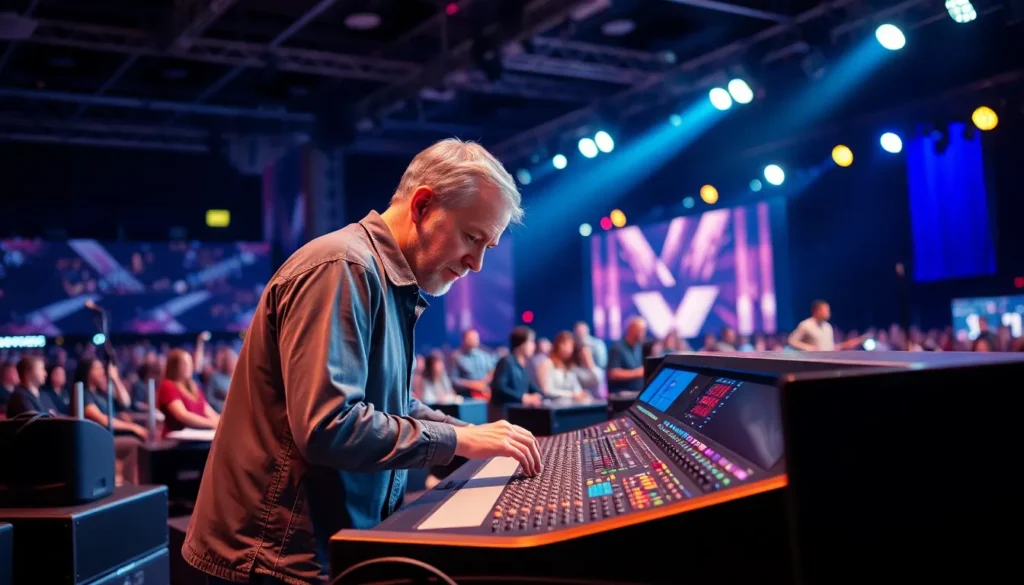
When the lights dim and the crowd’s energy surges, the magic of live performance hinges on one crucial element: stage monitor mixing. It’s the unsung hero of the sound world, ensuring that performers hear exactly what they need to deliver a show-stopping experience. Without it, musicians might as well be singing in the shower—great acoustics but not much of an audience!
Overview of Stage Monitor Mixing
Stage monitor mixing plays a crucial role in live performances, providing essential sound support for artists. Performers rely on monitor mixes to hear their own vocals and instruments clearly. Without effective monitoring, musicians may struggle to stay in tune or sync with the band. Quality monitors can include floor wedges, in-ear monitors, and side fills. Each type serves different scenarios, catering to various venue sizes and performer preferences.
Mixing engineers prioritize clarity and volume in the monitor mixes to enhance the overall performance experience. They adjust levels for each instrument or vocal to ensure musicians get the sound they need. A typical process involves setting up individual mixes for each performer. This helps address differing listening requirements and preferences, optimizing the performance atmosphere.
Real-time adjustments during performances often become necessary due to changes in dynamics or varying audience noise levels. Engineers need to communicate effectively with performers to ensure adjustments align with their needs. Understanding the acoustics of the venue is equally important for achieving optimal sound distribution.
Effective stage monitor mixing impacts not only the musicians but also the overall audience experience. Engaged performers tend to deliver better shows, directly influencing audience enjoyment. For sound engineers, mastering the art of monitoring involves practice, close attention to detail, and responsive communication. In essence, successful monitor mixing serves as the foundation for a memorable live performance.
Importance of Stage Monitor Mixing
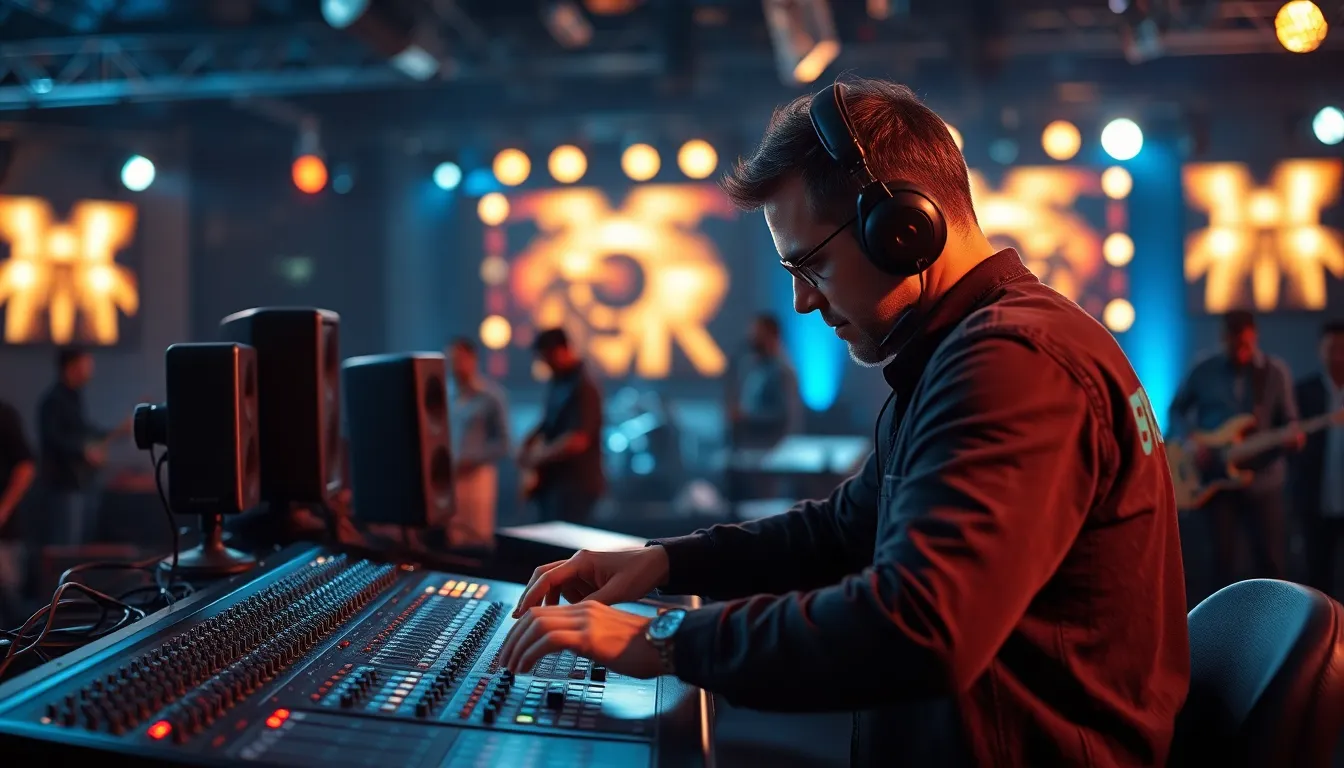
Stage monitor mixing plays a crucial role in live performances, significantly affecting both performers and the audience.
Enhancing Performer Experience
Effective monitor mixing enables artists to connect with their audience. Clear and balanced sound allows musicians to focus on their performance without distraction. In-ear monitors and floor wedges cater to specific preferences and environments, ensuring performers hear precisely what they need. This tailored approach fosters confidence on stage, enhancing overall delivery. Properly executed mixes keep performers aware of their sound, enabling them to make timely adjustments. It’s essential for engineers to maintain constant communication with artists for optimal results.
Improving Sound Quality
High-quality stage monitor mixing directly impacts sound clarity. Monitor engineers prioritize precision in response, tailoring mixes for each performer. This attention to detail reduces stage noise, which can interfere with the audience’s listening experience. Utilizing various monitor types, such as side fills, ensures sound reaches the entire band evenly. Real-time adjustments account for shifts in ambiance and performance dynamics. Understanding venue acoustics allows sound engineers to refine output, enhancing sound distribution. Ultimately, clear stage monitoring contributes to a memorable event for both performers and audience members.
Types of Stage Monitors
Understanding the types of stage monitors enhances the performance experience for artists and audiences alike. Each type serves distinct purposes and meets varying needs.
Floor Monitors
Floor monitors, also known as wedge monitors, sit on the stage floor and face upward towards performers. They deliver sound directly to the artist, ensuring clarity and presence of both vocals and instruments. This type typically features a wedge-shaped design for optimal sound projection. Multiple floor monitors can accommodate large ensembles, where each musician may require a unique mix tailored to their preferences. Precise positioning of these monitors minimizes feedback and maximizes sound quality, allowing performers to connect better with their audience through clearer audio.
In-Ear Monitors
In-ear monitors (IEMs) fit securely within an artist’s ears, offering a personalized listening experience. These devices reduce excess stage noise while providing high-quality sound isolation. IEMs facilitate individualized mixes, allowing performers to control their audio environment. Their compact design ensures freedom of movement, crucial during energetic performances. Wireless options eliminate cable clutter, enhancing stage aesthetics. The versatility of IEMs makes them ideal for various settings, particularly in larger venues where control over sound quality is critical for performer comfort.
Techniques for Effective Mixing
Effective stage monitor mixing requires specific techniques that enhance sound quality and clarity. Utilizing these methods ensures performers receive optimal audio support during live shows.
Balancing Sound Levels
Balancing sound levels plays a crucial role in monitor mixing. Start by adjusting the volume of individual instruments and vocals, ensuring each element is distinct and clear. Clarity helps musicians hear their contributions, fostering a cohesive performance. Prioritizing the lead vocal typically enhances the overall mix, while background instruments should complement rather than overpower the primary sound source. Engineers should regularly check levels to accommodate changes in performance dynamics. Periodic adjustments to levels throughout the show help maintain a consistent audio experience for performers.
EQ Adjustments
EQ adjustments are essential for creating a polished sound during live performances. Begin by cutting frequencies that cause muddiness, often found in the low mid-range, to improve overall clarity. Boosting the presence frequencies of vocals and key instruments enhances their definition within the mix. It is important to tailor equalization settings for each performer, as individual preferences may vary. Regular communication between engineers and artists helps refine these adjustments. Focus on tailoring EQ settings to achieve a balanced and pleasant sound that contributes to the performers’ confidence on stage.
Challenges in Stage Monitor Mixing
Stage monitor mixing presents several challenges that can impact the overall performance experience. Each issue requires careful attention and skillful solutions from audio engineers.
Handling Feedback Issues
Feedback occurs when sound from the monitor returns to the microphone, creating a loop. This situation disrupts the performance and can cause discomfort for both performers and the audience. To combat feedback, engineers must carefully position microphones, adjust monitor levels, and utilize EQ to eliminate problematic frequencies. For larger ensembles, monitoring settings may need frequent adjustments to ensure clarity. Implementing directional microphones can also reduce feedback risks, allowing performers to hear themselves without distractions.
Managing Multiple Sources
Mixing for several performers often involves juggling various sound sources, making clarity a challenge. Each artist requires a unique sound mix tailored to their specific needs, which adds complexity. Creating individual mixes ensures that vocals and instruments are distinct. Engineers carefully balance sound levels, prioritizing lead vocals while keeping instrument clarity intact. Real-time communication with performers helps address changes in needs as the performance progresses. Integrating technology, such as personal monitor mixers, further assists performers in achieving desired sound adjustments independently.
Stage monitor mixing plays a crucial role in the success of live performances. It empowers artists by providing the sound clarity they need to engage with their audience effectively. By tailoring mixes to individual performers and utilizing the right type of monitors, sound engineers ensure that each artist can hear themselves and their bandmates clearly.
The intricate balance of sound levels and EQ adjustments enhances the overall performance atmosphere. As challenges arise during live shows, such as feedback and multiple sound sources, effective communication and technology become essential tools for achieving the desired sound. Ultimately, well-executed stage monitor mixing not only elevates the performers but also enriches the audience’s experience, making it an indispensable aspect of any live event.