

Imagine cruising down the highway with your favorite tunes blasting, only to realize your car’s audio system sounds more like a tin can than a concert hall. If that’s the case, it’s time to talk about car audio tuning. This isn’t just about cranking up the volume; it’s about transforming your vehicle into a sound sanctuary where every note hits just right.
Understanding Car Audio Tuning
Car audio tuning plays a crucial role in enhancing the sound quality inside a vehicle. Proper tuning enables the driver and passengers to enjoy clear and balanced audio, making every ride more enjoyable.
Importance of Proper Tuning
Proper tuning adjusts audio settings to improve clarity and balance. A system without proper tuning may produce distorted sound, leading to an unpleasant experience. Clear sound reproduction relies on equalization and frequency adjustments. Tailoring these settings allows music to resonate effectively in a car’s unique acoustic environment. Drivers benefit from increased bass response and reduced noise. Ultimately, good tuning leads to a well-rounded audio experience, enriching the time spent on the road.
Common Misconceptions in Car Audio
Many believe that louder volumes equal better sound quality. This misconception overlooks the importance of sound clarity and balance. Some think that factory settings provide optimal performance, ignoring the need for personalized adjustments. It’s a common belief that only expensive equipment delivers exceptional audio. However, proper tuning enhances sound, regardless of the system’s cost. Lastly, some individuals underestimate the impact of speaker placement. Location significantly affects sound dispersion, which affects overall audio quality. Understanding these misconceptions helps drivers appreciate the true value of car audio tuning.
The Basics of Car Audio Systems
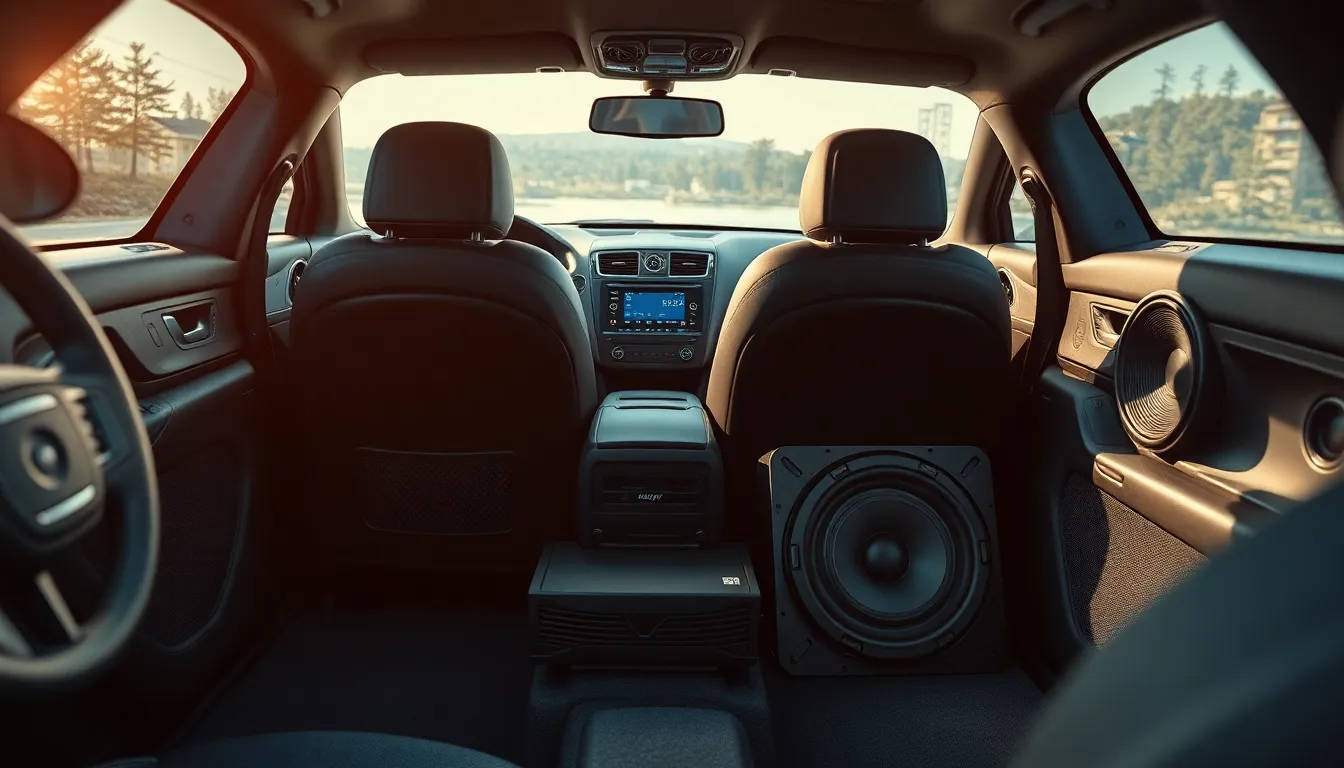
Car audio systems consist of various components that work together to deliver sound. Understanding these components enhances the audio experience while driving.
Components of a Car Audio System
Car audio systems typically include a head unit, speakers, amplifiers, and subwoofers. Head units control the audio sources and settings. Speakers convert electrical signals into sound, while amplifiers boost the power of these signals. Subwoofers specialize in producing low-frequency sounds for added depth, ensuring a more complete audio experience.
How Each Component Affects Sound Quality
Each component significantly impacts overall sound quality. Head units influence the clarity and range of audio playback. Speakers, when matched to the head unit, provide distinct sound profiles. Amplifiers deliver clean power, reducing distortion at higher volumes. Subwoofers enhance bass, making music richer. Proper placement of each component also affects how sound travels within the car, leading to a balanced audio environment.
Techniques for Car Audio Tuning
Tuning a car audio system involves several techniques to enhance sound quality. These methods focus on adjusting settings and placements for a clearer, more enjoyable listening experience.
Equalization Techniques
Equalization adjusts specific frequency responses. This process balances audio by boosting or cutting frequencies, ensuring clarity across the spectrum. For instance, reducing bass frequencies can eliminate muddiness, while enhancing treble can improve vocal clarity. Many car audio systems feature equalizers that offer presets or manual adjustments. Users often begin by identifying problematic frequencies that detract from the overall quality. Employing these adjustments leads to a more tailored sound profile, enhancing the listening experience significantly.
Time Alignment Methods
Time alignment optimizes sound waves’ arrival at the listener’s ears. This technique adjusts the timing of audio signals from various speakers, reducing phase issues and improving clarity. Users can place each speaker at varying distances to achieve the desired effect. Software and hardware solutions help achieve precise delays for specific speakers. Adjustments may include delaying the signals from rear speakers, ensuring sound reaches the listener simultaneously from all sources. Effectively implemented time alignment results in a more cohesive soundstage, which significantly elevates audio fidelity in the vehicle.
Tools for Car Audio Tuning
Effective car audio tuning requires specific tools to achieve optimal sound quality. Several software options and hardware components can significantly enhance the tuning process.
Recommended Software
Many users prefer software options that facilitate audio tuning. Equalization software often includes features for adjusting frequency responses and provides real-time feedback on changes. Programs like REW (Room EQ Wizard) allow for detailed analysis of sound quality and speaker response. Others, such as Audacity, give users the ability to manipulate audio files to find the perfect sound. Advanced DSP software improves the overall performance of the audio system, allowing for easy adjustments. Utilizing these tools can make a noticeable difference in clarity and balance during playback.
Essential Hardware
Selecting the right hardware is crucial for effective audio tuning. A quality sound meter, for example, helps measure the acoustics inside the vehicle, providing valuable feedback for adjustments. Additionally, a digital multi-meter can measure voltage and resistance in the audio equipment, ensuring proper functionality. Calibration microphones are commonly used to capture sound accurately, especially for equalization processes. Investing in an adjustable equalizer or DSP processor can provide fine-tuning capabilities, enhancing overall sound quality. Combining these hardware tools significantly improves the car audio experience.
Car audio tuning is essential for anyone looking to elevate their driving experience. By focusing on clarity and balance rather than sheer volume, drivers can enjoy music in its best form. Understanding the components of a car audio system and how they interact is key to achieving optimal sound quality.
Utilizing techniques like equalization and time alignment can significantly enhance audio fidelity, making every journey more enjoyable. With the right tools and knowledge, anyone can transform their car’s audio environment, ensuring that every note is heard as intended. Embracing car audio tuning not only enhances sound quality but also enriches the overall driving experience.