

Imagine slipping on a pair of headphones and being transported to a bustling café in Paris or a serene forest at dawn. That’s the magic of binaural audio technology. It’s not just sound; it’s an experience that tickles the ears and engages the mind. This innovative technique captures audio in a way that mimics how humans naturally hear, creating a three-dimensional soundscape that’s simply irresistible.
Overview of Binaural Audio Technology
Binaural audio technology creates immersive sound experiences that mimic human hearing. This technique captures and reproduces sound in a way that envelops listeners in a realistic three-dimensional auditory environment.
Definition and Concept
Binaural audio involves recording or synthesizing sound using two microphones positioned to mirror human ear placement. This method simulates the way humans naturally perceive sound, accounting for variations in arrival times and sound intensity between ears. Such recordings often utilize a dummy head to replicate human anatomy, enhancing depth perception. Users experience sound from various directions, making them feel as if they are within the environment. This distinct approach contrasts with traditional stereo sound, which lacks the same level of immersion and spatial awareness.
The Science Behind Binaural Audio
Physiological aspects play a crucial role in binaural audio’s effectiveness. The human head and ears shape sound waves, creating unique auditory cues. Interaural time differences and interaural level differences contribute significantly to how sounds localize. These factors help listeners discern directionality, enabling them to identify where sounds originate. Psychoacoustic principles also enhance the experience, invoking emotional responses in listeners. Reproduction methods, including headphones, ensure these auditory cues are preserved and conveyed effectively, allowing for a full auditory experience that augments the enjoyment of music, films, and virtual reality applications.
Benefits of Binaural Audio Technology
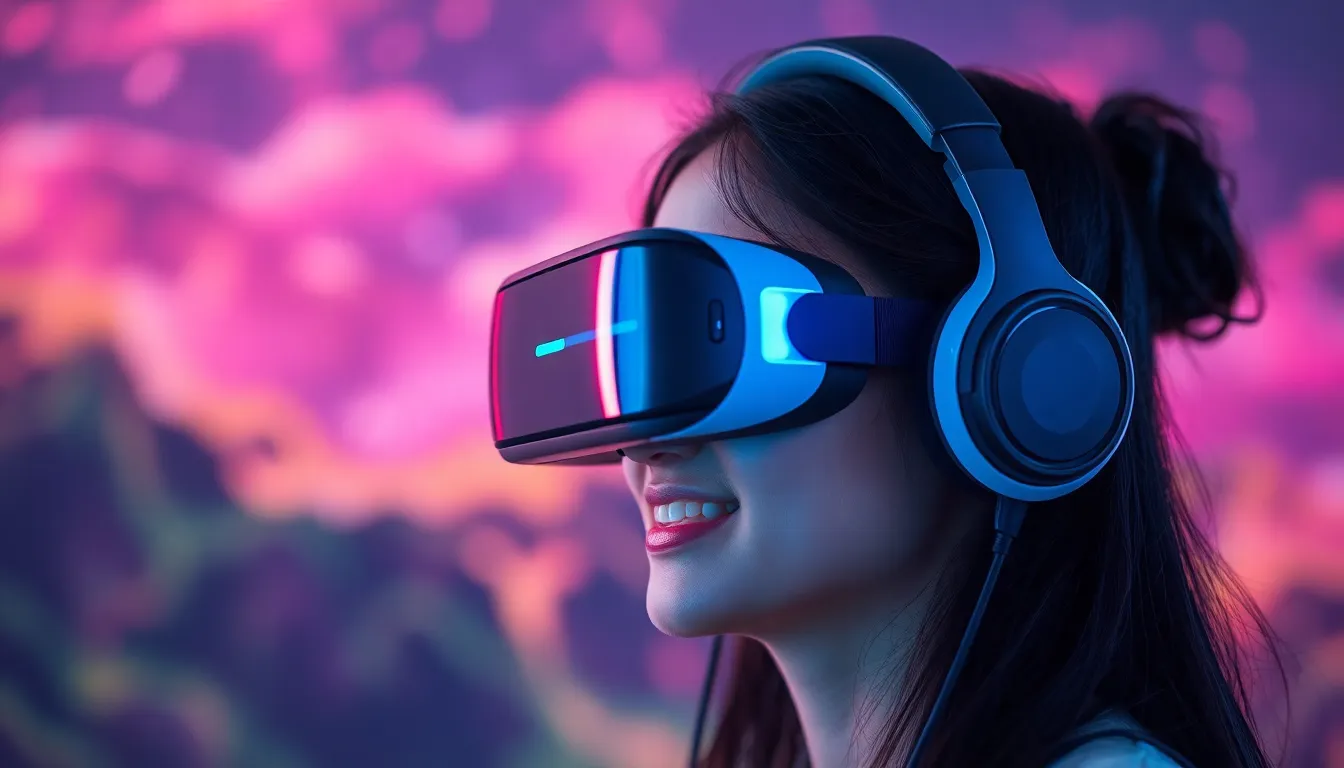
Binaural audio technology offers distinct advantages, improving sound experiences across various applications.
Enhanced Listening Experience
Enhanced sound clarity immerses listeners in a three-dimensional audio environment. Binaural recordings mimic human hearing, which heightens spatial awareness. Listeners experience localized sound, making it easier to identify direction and distance. Emotional engagement increases, acting as a catalyst for deeper connections to content. Headphone use is vital, ensuring the intricate sound details are faithfully reproduced. Audiences find pleasure in music, movies, and virtual experiences, as every nuance adds to the overall enjoyment.
Applications in Various Industries
Many industries utilize binaural audio to elevate user experiences. In gaming, developers create realistic environments that immerse players in their surroundings. Virtual reality applications often employ binaural sound to enhance realism, making situations feel convincing. Film production benefits from this technology, as directors can craft captivating audio landscapes that accompany visual storytelling. Education uses binaural audio to create engaging learning experiences, allowing students to interact with sound in a meaningful way. In meditation and wellness, binaural beats promote relaxation and focus.
Comparison with Traditional Audio Techniques
Binaural audio technology contrasts markedly with traditional audio techniques, offering unique auditory experiences.
Stereo vs. Binaural Sound
Stereo sound employs two channels to deliver audio, producing width but lacking depth. Binaural sound, however, utilizes two microphones positioned as human ears to capture nuances in sound localization. This method recreates a more realistic soundscape that closely mimics how individuals perceive sounds in their environment. Listeners perceive movement and directionality more naturally with binaural audio compared to stereo, enhancing engagement and immersion. The difference in experience highlights the advancements in sound technology with binaural approaches.
Spatial Awareness and Immersion
Spatial awareness significantly improves with binaural audio technology. Sounds appear to resonate from specific locations, allowing listeners to pinpoint the origin of auditory cues. This heightened awareness creates a truly immersive experience, especially in virtual reality and gaming environments. Enhanced emotional engagement stems from this depth of perception, making users feel as if they are part of the audio scene. Traditional audio techniques often lack this level of acoustic realism, making binaural alternatives increasingly preferable across various applications.
Current Trends in Binaural Audio Technology
Binaural audio technology continues to evolve, pushing the limits of sound immersion in various fields.
Innovations and Developments
Recent innovations enhance user experience through advancements in recording techniques and processing algorithms. New software applications use machine learning to analyze sound environments, optimizing binaural soundscapes. Developers create virtual reality platforms that integrate real-time binaural audio, increasing realism during user experiences. Additionally, portable recording devices designed specifically for binaural capture allow creators to produce high-quality audio in diverse settings. As research in psychoacoustics expands, the understanding of how sound influences emotion and perception improves, driving further exploration of binaural techniques.
Popular Binaural Audio Software and Hardware
Numerous software tools exist for both professional and amateur audio creators. Applications such as binaural synthesis plugins enhance music production and sound design. Popular digital audio workstations (DAWs) also integrate binaural audio capabilities, making it accessible for all users. Hardware options include specialized microphones designed to mimic human ear placement, ensuring accurate sound capture. Headphones engineered for binaural listening provide optimal playback quality, allowing for an immersive experience. Some companies even offer dedicated binaural audio interfaces, supporting enhanced sound reproduction in various settings.
Future of Binaural Audio Technology
Binaural audio technology continues to evolve, promising exciting developments ahead in the audio landscape.
Potential Advancements
Innovations in spatial audio processing are on the horizon. Improvements in machine learning techniques will enhance binaural sound production and optimize real-time audio experiences. Enhanced recording tools, such as 3D microphones, allow for more accurate sound capture in diverse environments. Integration with augmented reality could further increase immersive capabilities. Emerging platforms are likely to accommodate greater interactivity, fostering more engaging user experiences. Continued focus on user-friendly software ensures that creators can easily adopt binaural techniques, enhancing accessibility.
Predictions for the Industry
The demand for immersive audio experiences is expected to rise across various sectors. Growth in the virtual reality market will likely drive the adoption of binaural technology, particularly in gaming and simulation applications. Film and entertainment industries are set to explore new storytelling dimensions through enhanced audio environments. The rise of smart devices will push developers to incorporate binaural features, creating richer sound experiences for users. Additionally, therapeutic uses of binaural beats for wellness are anticipated to gain popularity, addressing mental health needs with innovative solutions. Overall, a shift toward more interactive and immersive audio experiences will shape the industry’s future.
Binaural audio technology is revolutionizing the way people experience sound. Its ability to create immersive environments enhances emotional engagement and spatial awareness across various applications. As advancements continue to emerge in recording techniques and processing algorithms, the potential for even more realistic soundscapes is on the horizon.
The integration of binaural audio in gaming, virtual reality, and wellness is just the beginning. Future developments will likely push the boundaries of how sound interacts with users, fostering deeper connections and more engaging experiences. With the growing demand for immersive audio, binaural technology is set to play a crucial role in shaping the future of entertainment and beyond.