
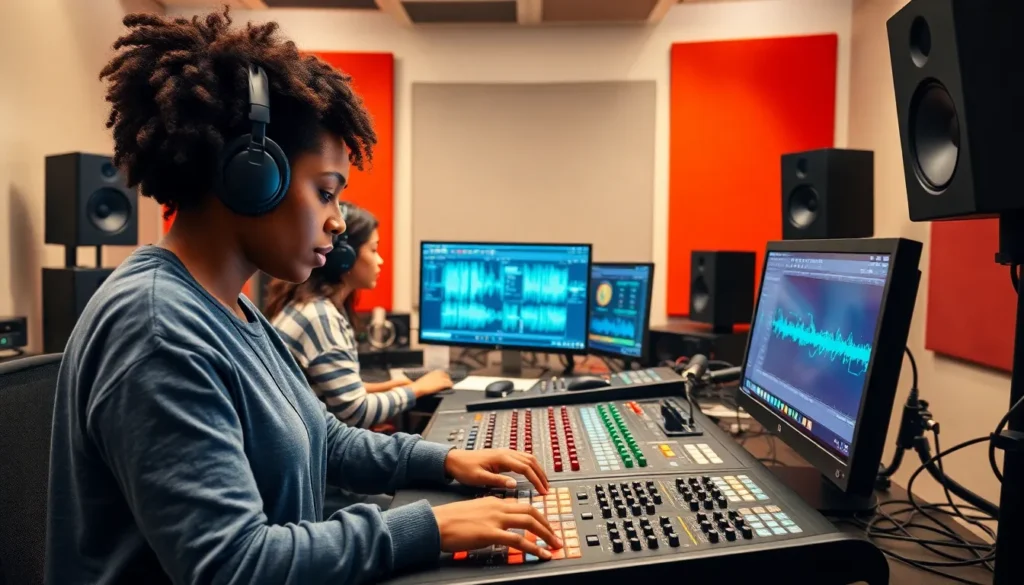
In a world where music streams faster than you can say “turn it up,” an audio technology degree is your golden ticket to joining the sonic revolution. Imagine mastering the art of sound, from recording the next chart-topping hit to perfecting the audio for blockbuster films. It’s not just about playing air guitar in your living room; it’s about becoming the wizard behind the curtain, turning everyday noises into a symphony of creativity.
Overview of Audio Technology Degree
An audio technology degree equips students with essential skills for careers in sound production and audio engineering. Various programs offer training in areas such as recording, mixing, and sound design. Learning opportunities vary from classroom lectures to hands-on studio experience.
Courses in audio technology often include music theory, acoustics, and digital audio production. Students also explore software applications used in the industry, such as Pro Tools and Logic Pro. Many institutions emphasize practical training, allowing students to work with professional-grade equipment.
Networking plays a crucial role in this field. Students often collaborate on projects and participate in internships with local studios and production companies. Connecting with industry professionals enhances job prospects, providing insights into current trends and technologies.
Graduates of audio technology programs can pursue diverse career paths. Options include sound engineer, music producer, audio editor, and live sound technician. The demand for skilled audio professionals continues to grow, particularly in the realms of music, film, and gaming.
Overall, an audio technology degree offers a solid foundation for individuals passionate about sound and its applications. Pursuing education in this field opens doors to creative opportunities in a dynamic industry.
Core Components of the Degree

An audio technology degree focuses on equipping students with the skills needed for success in sound production and audio engineering. Essential components include coursework and hands-on experience.
Essential Courses
Courses play a crucial role in forming a comprehensive understanding of audio technology. Music theory provides a foundation for analyzing sound structures. Acoustics helps students grasp how sound interacts with environments, while digital audio production teaches techniques for creating and manipulating audio files. Mixing and mastering courses refine skills in balancing levels and enhancing recordings. These critical courses foster an in-depth knowledge base necessary for various audio careers.
Practical Experience
Practical experience forms a significant aspect of an audio technology degree. Students engage in real-world projects that enhance their technical prowess. Utilizing professional-grade equipment allows students to apply theoretical concepts in practical settings. Internships with industry professionals create networking opportunities and insights into the field’s workings. Collaborative projects help students gain experience in teamwork, critical for success in fast-paced environments like music and film. This focus on hands-on learning prepares graduates for diverse roles in audio technology.
Career Opportunities
An audio technology degree provides numerous career pathways in various industries. Students can enter fields ranging from live sound production to game audio design.
Job Roles in Audio Technology
Sound engineer, music producer, and audio editor are common job roles for graduates. A sound engineer focuses on recording and mixing sound, ensuring high audio quality for various media. Music producers oversee music production from concept to final release, collaborating with artists to enhance creative output. Audio editors assemble and refine audio for projects, ensuring consistency and clarity. Live sound technicians manage audio systems during events, optimizing sound quality in real-time. These roles showcase the degree’s versatility, allowing graduates to find their niche within the audio landscape.
Industry Demand
Demand for audio technology professionals continues to grow, fueled by advancements in music, film, and gaming. The U.S. Bureau of Labor Statistics anticipates a 10% increase in audio and video equipment technician jobs from 2021 to 2031. Streaming services and content creation influencers drive the need for skilled audio specialists. Additionally, the entertainment industry’s evolution requires continuous audio innovation, increasing job availability. Graduates can leverage this trend to build rewarding careers in dynamic environments.
Skills Acquired Through the Degree
An audio technology degree cultivates a diverse skill set essential for success in the audio industry. Students gain proficiency in recording techniques, enabling them to capture high-quality sound in various environments. Mixing skills enhance their ability to blend audio tracks seamlessly, ensuring a polished final product.
Understanding music theory forms another critical component of the curriculum. It provides students with knowledge of musical structures, helping them create and manipulate sound effectively. Acoustics coursework teaches students how sound interacts with different spaces, which is vital for optimizing audio quality in diverse settings.
Another important area is digital audio production. Students learn to utilize industry-standard software, equipping them with tools to edit and produce audio content efficiently. Practical experience through hands-on projects solidifies technical skills while familiarizing students with professional-grade equipment.
Collaboration is emphasized in many courses. Working on group projects develops teamwork skills, crucial for navigating the fast-paced audio environment. Networking opportunities during internships prepare students for real-world scenarios, allowing them to form valuable industry connections.
Technical problem-solving also becomes a key strength. Graduates learn to troubleshoot equipment issues and adapt to unpredictable situations during live events. This ability to think on their feet is essential in dynamic settings like studios and concert venues.
An audio technology degree provides graduates with a robust set of skills, including recording, mixing, acoustics, digital production, collaboration, and problem-solving. These competencies prepare them for a range of career paths, meeting the growing demand for skilled professionals in the audio industry.
Pursuing an audio technology degree offers a pathway to a vibrant and evolving industry. With the right blend of technical skills and creative insight, graduates are well-equipped to thrive in various roles within sound production. The hands-on experience gained through internships and collaborative projects not only enhances their expertise but also builds valuable industry connections.
As the demand for skilled audio professionals continues to grow, those with an audio technology degree will find themselves at the forefront of innovation in music, film, and gaming. This degree is more than just an academic credential; it’s a gateway to a fulfilling career for anyone passionate about sound and its transformative power.